(855) 771-3154
Satellite vs. 5G Home Internet: Which is Better for Rural Areas


If you’re living in a rural area where internet is not as fast as in the city, this blog has got answers for you. We have tested satellite internet connections in rural areas and compared their performance with 5G home internet service to bring you the verdict. So, if the following queries are on your mind, read on!
- What are the internet options in rural areas?
- What is satellite internet?
- What is 5G home internet?
- IS 5G better than satellite internet?
- Top internet providers for rural area users
What are the Internet Options in Rural Areas?
Internet options in rural areas were previously limited to satellite internet and DSL, mainly. One of the major reasons for limited options was the absence of infrastructure like wiring and cables, which is why satellite internet was the most popular and widely available connection. However, recently, mobile providers have come up with a more reliable solution – 5G home internet. This connection uses mobile cell towers in the area to deliver a faster internet service to rural users. Let’s understand how both of these connection types really work.
To understand the difference between Satellite and DSL in detail, read: Satellite Internet vs. DSL
What is Satellite Internet?

Satellite internet is one of the most widely available connection types because it uses satellites in space to transmit internet to the ground. You can access a satellite internet connection anywhere with a clear sky above you. The drawback? Slower speeds, higher latency, impact of weather, and network congestion.
Satellite internet is probably not the top choice for high-speed internet users because it takes longer for the signal to reach the ground, considering the distance from the satellite. However, for basic online activities like casual streaming, sending messages, emails, surfing the web, etc., satellite internet works sufficiently.
With development in the satellite internet industry and the emergence of low-orbit satellites like Starlink, the connection type has gained its stature recently.
Explore the performance of Satellite Internet for streaming!
What is 5G Home Internet
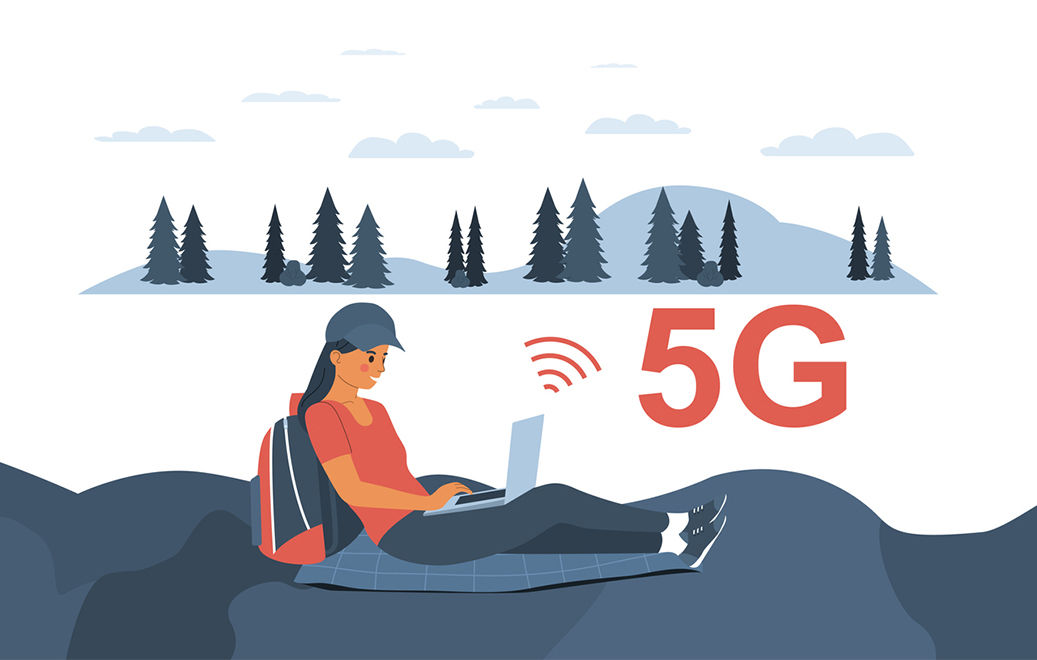
5G home internet uses the latest 5G technology transmitted through cell towers installed in various locations throughout rural areas. 5G home internet providers use fixed wireless technology, which means there is no need for any elaborate infrastructure or wiring. The drawback: It is not as widely available as satellite internet.
However, 5G home internet offers faster speeds, better latency, and a more reliable connection for high-speed internet users. This connection type is more ideal for heavy internet activity like HD streaming, gaming, working from home, video calling, and more.
Also Read: Is 5G Good for Gaming and Streaming?
Is 5G Home Internet Better Than Satellite Internet?
We’ve broken down both connection types into categories that best define internet performance for a detailed comparison.
Speed
5G home internet offers faster speeds compared to satellite internet, as it uses cell towers installed in the area to deliver signals. Popular providers like Hughesnet and Viasat offer maximum speeds of up to 150 Mbps only which may not be sufficient for every household. Moreover, satellite internet speed is often reduced due to bad weather conditions, which impacts the performance of your connection.
Latency
Latency refers to the time it takes for an action to be completed over the internet. The higher your latency is, the longer you’ll have to wait from the time you click on a link to when it opens. Satellite internet offers higher latency compared to 5G home internet because of the long distance between your device on the ground to the satellite up in space. This distance causes a lag in online activity.
5G home internet providers like Verizon, on the other hand, offer lower latency compared to satellite internet and are more reliable for high-speed usage.
Price
Satellite internet is definitely more expensive than 5G internet due to infrastructure and equipment costs. 5G home internet comes with no complex equipment and uses already existing cell towers to transmit signals to your home. However, to deliver satellite internet, providers have to invest a heavy sum, and you will have to get your house satellite internet-ready, which adds to your overall cost.
Data Caps
Data caps refer to the amount of data included with your internet plan, after exceeding which, either your speed will slow down, or you will have to buy more data. Satellite internet providers often include unlimited standard data with limited priority data. The priority data delivers the advertised speeds, whereas the standard data might be slower than expected.
5G home internet providers mostly come with unlimited data, no overage fee, or no soft data caps. You get consistent speeds with unlimited data for all your favorite online activities.
Installation
5G home internet is very simple to install and has no elaborate equipment. All you need is a gateway plugged into a power supply at home, and you’re ready to get online. Satellite internet, on the contrary, requires a technician-accompanied professional installation with multiple equipment that are installed inside and outside your home. This means you will have to pay more for satellite internet and its equipment, and make time for an installation appointment.
Our Verdict
Between a satellite and 5G home internet connection for users in rural areas, which would work best for you depends entirely on your personal requirements, location, budget, and online activities. While 5G home internet offers faster speeds, lower latency, unlimited data, and affordable prices, it may not be available everywhere. That’s where satellite internet steps in and takes the game. Satellite internet is available everywhere under the sky, and all other internet connection types are yet to beat it for this!
So, if you have 5G home internet available at your address, your first option should definitely be this hassle-free connection. If not, satellite internet will quite literally have your back.
Looking for internet in rural America? Enter your zip code to check what options are available in your area.

Check for services and offers available in your area