(855) 771-3154
Digital Subscriber Line, or DSL, has been providing internet access to users since the mid-to-late 1990s. It’s the founding medium for modern-day internet connections. But is it still a good internet option in 2026? Let's find out in this blog.
What is DSL Internet & How Does it Work?
DSL internet was first patented in 1988 and was introduced in the 1990s. It used telephone cable lines made of copper wiring for transmitting signals and establishing an internet connection. However, unlike a dial-up connection, DSL allowed its users to use the phone and enjoy internet service together. Here’s how it worked
- An internet connection from your provider to your home was established using telephone cable lines.
- A DSL modem would use a different frequency than voice calls to transmit data over the cables.
- The modem also converted these signals for internet transmission.
A service hub was installed to manage the signals. The greater the distance of your home from the service hub, the weaker the signal strength would become.
DSL Internet Speed: What to Expect
Typical DSL download speed ranges from 10-100 Mbps and upload speed from 1-5 Mbps. The FCC definition of broadband is providing at least 25 Mbps, and most DSL connections now classify as a broadband connection.
However, the speed of a DSL connection depends upon the plan from your provider as well as the distance from the service hub. It’s one of the reasons why some of the legacy plans still provide up to 10 Mbps in areas with limited service availability.
DSL vs Cable vs Fiber Internet
| Feature | DSL | Cable | Fiber |
|---|---|---|---|
| Infrastructure | Copper phone lines | Coaxial cable | Fiber-optic cable |
| Typical download speed | 10–100 Mbps | 100–1,000 Mbps | 300 Mbps–10 Gbps |
| Typical upload speed | 1–10 Mbps | 5–50 Mbps | Often symmetrical |
| Availability | Very wide, including rural | Mostly suburban/urban | Limited, expanding |
| Price | Lowest | Mid-range | Mid to high |
| Reliability | Distance-dependent | Stable | Most stable |
- Both DSL and cable internet use telephone lines for internet connectivity. However, DSL is widely available but offers less speed and bandwidth than regular cable internet.
- DSL is more widely available than fiber internet; however, its download and upload speeds and latency are way less than those of any fiber connection.
DSL Limitations to Know
Before signing up for a DSL connection, here are the honest downsides that you should consider:
- Speed Cap: while typical speeds go up to 100 Mbps, almost all DSL internet providers cap their speeds below this limit.
- Reliability Issues: the greater the distance between your connection and the provider’s hub, the greater the chance of unreliable and unstable internet connectivity.
- Slow Upload Speed: even though download speeds can cap at 100 Mbps, upload speeds are barely 10 Mbps.
- Phasing Out Technology: Since cable internet offers better performance over telephone lines, almost all internet providers are phasing out DSL technology and shifting to cable and fiber wherever possible.
- Not Ideal for Heavy Use: Since download and upload speeds are low and latency is high, DSL internet is not ideal for intensive tasks such as 4K streaming, multiplayer gaming, etc.
Ideal Use Cases for DSL in 2026
While cable internet still outperforms DSL, there are areas where only DSL is available. This is possible because it still depends on telephone lines. The only two alternatives to DSL internet include fixed wireless/ 5G home internet or satellite internet.
Both connection types are readily available in rural areas and can provide good speed and performance. However, even these connections are only suitable for the following activities, similar to DSL:
- Light Usage: from email to browsing, watching in HD on one or two devices, DSL, 5G, and satellite internet can only do so much.
- Budget: DSL connections are cheaper compared to other broadband options, making them a good choice for budget-conscious users.
- Availability: If there’s no cable or fiber internet nearby, DSL connections or satellite connections are the only ones that can provide connectivity in strictly remote areas.
So, Is DSL Worth It in 2026?
The real question is whether DSL is still worth it in 2026 or not. To answer directly, no, it’s not. With the world moving towards widespread fiber application and 5G access, DSL is a slow and outdated option. However, for extremely remote areas where the only other option is satellite internet, DSL is the only viable solution.
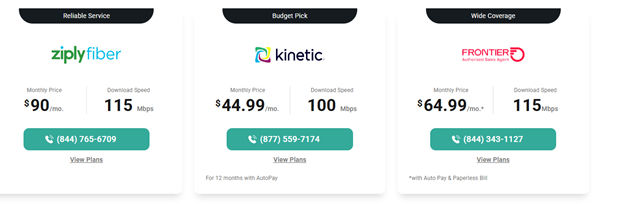
Top DSL Internet Providers
Final Thoughts
With providers implementing statewide cable and fiber connectivity, it’s highly possible that DSL internet services will go extinct just like a dial-up connection. Before deciding on what connection to choose, compare internet providers in your area based on speeds, pricing, and infrastructure to pick the best option.
Enter Your Zip Code to Find Reliable Internet Providers Near You
FAQs
Is DSL better than 5G?
Taking availability out, no, 5G outperforms DSL in every parameter, making it far superior to DSL.
Should I choose DSL or Satellite?
While DSL is cable internet, many satellite internet providers offer better speeds without data caps, making them a better choice.
Is cable better than 5G?
If it's hybrid cable internet or fiber optics, then it’s still better than 5G internet.